Marketplace Monastics

How to live in a Downtown Abbey

  • About

Thankful on Purpose … Day Three

Posted by Cor Unum Abbey on November 19, 2015
Posted in: Uncategorized. Tagged: 1 Thessalonians 5:16-18, gratitude, Joseph in Egypt, thankfulness, thanksgiving. Leave a comment

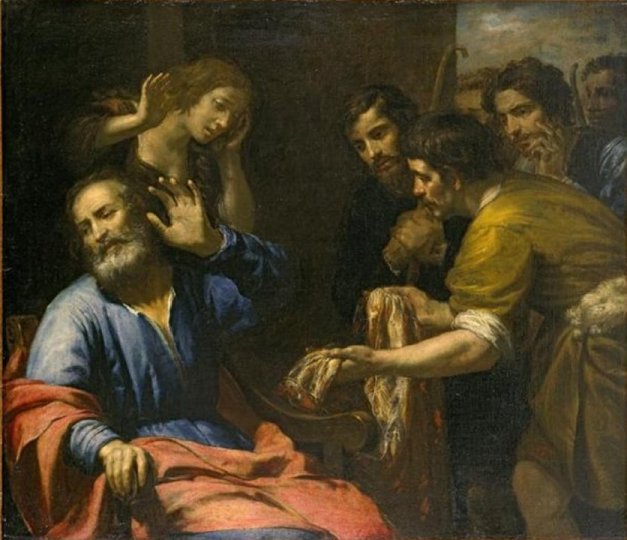
Giovanni_Andrea_de_Ferrari_-_'Joseph's_Coat_Brought_to_Jacob',_oil_on_canvas,_c._1640,_El_Paso_Museum_of_Art


If we were going shopping for a Sovereign God, isn’t this the one we ought to come home with, the One who commands us like this:


Rejoice always, pray without ceasing, in everything give thanks; for this is the will of God in Christ Jesus for you.

(1 Thessalonians 5:16-18, NKJV)


Yes, it’s true that we do sometimes shop around for a different model, but this, with the Royal Law of Love (James 2:8,) is the way things should be, and will be, when we live under the protection of an Almighty God in a fallen world.


It is almost without doubt that you know someone who asks, “If God is almighty, why is the world fallen in the first place? Why did He set it up like that?” This matter of thanksgiving helps to answer that question: where is the gratitude when no liberty of life or love has ever been known or granted? Where is thankfulness when there is nothing to either lift or humble the heart, where all is given, programmed, provided, and no lack is ever at all possible. Neither is any necessity for struggle, any possibility of failure, any sweetness of determination or success ever tasted.


The nursing infant knows hunger and satisfaction, but he doesn’t know that he knows them, and he isn’t grateful.


I have a friend who, in every difficulty and on every stormy sea, can be counted upon to remind me, “This is a GOOD thing!” At first I found it charming, occasionally nearly annoying, always good-humored, and now … I have discovered that she’s right. God is good; He does good; there is good to be discovered in and through every particle of life, but we know and see and appreciate it because life isn’t static.  Without God’s goodness there is only badness. That leaves room for hearts brimming over with gratitude.


Remember Joseph in Eqypt … “What you meant for evil, God meant to me for good.” He wasn’t making that up when he spoke it to the brothers who had sold him into slavery. He knew his God. His hardship, his prison servitude, betrayal, rejection, separation from his father’s love … all worked out for good, even to the saving of an entire nation … two of them! If we know our God, we know that He is working all things together for good for those who love Him and are called according to His purpose. Joseph, sitting in prison, certainly was numbered among those, but many are called, few are chosen.


By the mercies of Christ, may we give thanks today as if our lives depended upon it! Nothing that we see will remain un-surrendered to the goodness God has determined for us and for those we love, if we will not surrender our gratitude and hope.


“Jacob is Shown Joseph’s Coat”

Domenico Fiammella, c. 1640

public domain, Wikipedia

Share this:

  • Share on X (Opens in new window) X
  • Share on Facebook (Opens in new window) Facebook
  • Email a link to a friend (Opens in new window) Email
  • Share on Pinterest (Opens in new window) Pinterest
Like Loading...

The Sacrifice of Thanksgiving

Posted by Cor Unum Abbey on November 18, 2015
Posted in: Uncategorized. Leave a comment


Thanksgiving-Brownscombe


Here in Cor Unum Abbey, we continue to give thanks each day during our morning devotional hours. This is a time-honored Cor Unum practice with both a story and a weight of proof behind it. I’ll share that story again tomorrow. I believe it is worth the telling, but for today, consider the second reference to thanksgiving in Psalm 50. Verse 23 says …


“He who offers a sacrifice of thanksgiving honors Me;

And to him who orders his way aright

I shall show the salvation of God.”(NASB)

         Through the practice of Lectio Divina we have learned to read relationally, to ask questions, to read prayerfully. We certainly could say of this verse, “Lord, I believe this promise, gladly, and I will set out to order my ways according to Your Word. Keep me to that path, my Beloved.” We might say, “If I order my steps as I should, if I forsake sin and learn to humble myself in Your sight and develop a grateful heart, will you show your salvation to those around me?”


In giving thanks we could say, “For all that I haven’t done or done right, I thank You with all my heart that You lead on, that You are working in and around me, and that Your purposes do not fail.”


We have a practice of thanksgiving here in Cor Unum that has worked wonders for us, simply because it keeps us faithful in the thing that we wish to do. Most of us use a strand of beads each day with about forty or fifty of them on it, and we give thanks every day for one thing per bead. My strand was made by one of my daughters at camp, and it is precious to me. Brightly colored wooden beads on a long shoelace. Nothing mystical about it, but it has taken me into the courts of the Lord thousands of times.


May I encourage you once more to do more than scroll through the Thanksgiving messages on facebook? Some are uplifting, some clever, but none of them came from your heart. It isn’t enough for us to say to the Lord, “That touched my soul.” Ours is to touch His heart, and those who are parents know what it is when a child turns back to say, “Thank you.” We are His children and the sheep of His pasture, and we will teach our souls to be grateful, continually grateful, grateful beyond grief, depression, and loss. Here and now, no bulls or goats, ours is the sacrifice that the Lord looks to see and listens to hear, the sacrifice of thanksgiving.


“The First Thanksgiving at Plymouth”

Jennie A. Brownscombe, 1914, public domain, on Wikipedia

Share this:

  • Share on X (Opens in new window) X
  • Share on Facebook (Opens in new window) Facebook
  • Email a link to a friend (Opens in new window) Email
  • Share on Pinterest (Opens in new window) Pinterest
Like Loading...

Give thanks . . .

Posted by Cor Unum Abbey on November 17, 2015
Posted in: Uncategorized. Leave a comment

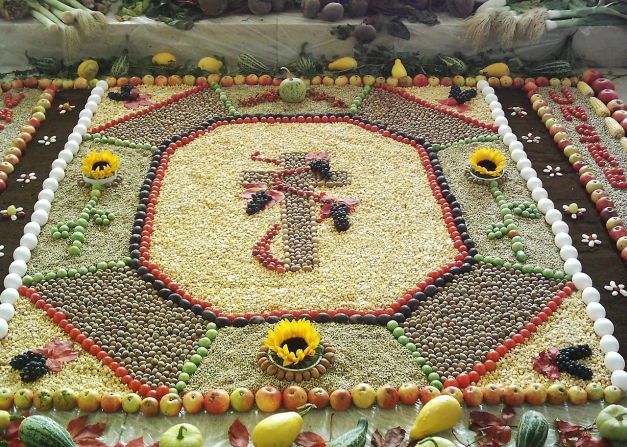
Treherz_Pfarrkirche_Erntedankteppich_2007


Today is the first day of the Cor Unum Advent Fast.


Our year is segmented into nine 40-day fasts, which totaling 360 days, leaves five days to spend in prayer and reflection for the year ahead.


Some of those fasts are as simple as “no eating between meals” or “no leisure reading.” It’s up to each, individually. Since the Lord made sure to include a chapter about the heart and the intent of fasting (Isaiah 58,) we try to make sure that what we do is what He can bless. Sometimes we skip a meal every day and spend that time in prayer. Sometimes we fast toward an outcome, as now at the beginning of the Advent Fast. From today until Thanksgiving we will be gathering a list of Bible verses that speak of thanksgiving, and meanwhile, we fast ingratitude. Look at these words … for all their attention to the system of sacrifice, God was looking for grateful hearts in Israel as He does in us. Without it, the bringing of bulls and goats was not what it was meant to be.


“Hear, O My people, and I will speak; O Israel, I will testify against you;

I am God, your God.

“I do not reprove you for your sacrifices,

And your burnt offerings are continually before Me.

“I shall take no young bull out of your house nor male goats out of your folds.

“For every beast of the forest is Mine, The cattle on a thousand hills.

“I know every bird of the mountains, And everything that moves in the field is mine.

“If I were hungry I would not tell you, For the world is Mine, and all it contains.

“Shall I eat the flesh of bulls or drink the blood of male goats?

“Offer to God a sacrifice of thanksgiving

And pay your vows to the Most High;

Call upon Me in the day of trouble;

I shall rescue you, and you will honor Me.” (Psalm 50:7-15, NASB)


            May I encourage you to dedicate this season of thanksgiving to … the giving of thanks! When we are simple and childlike enough to try it, it will change our lives. And may I say, perhaps not just online thanksgiving and the reading of seasonal posts … a daily season attached to your devotional hour, even if only two or three minutes long, of spoken gratitude, a “sacrifice of thanksgiving,” will matter more than you may be able to imagine.


The beautiful photo, rights permitted by Bene16 on Wikipedia, is a tapestry of fresh foods brought in celebration of Erntedankfest, the German Thanksgiving.  While I lived there, it was a great pleasure to see and participate in the beautification of the entire altar area of our church with the best of the produce from every garden.


Share this:

  • Share on X (Opens in new window) X
  • Share on Facebook (Opens in new window) Facebook
  • Email a link to a friend (Opens in new window) Email
  • Share on Pinterest (Opens in new window) Pinterest
Like Loading...

Imagine Heaven

Posted by Cor Unum Abbey on October 20, 2015
Posted in: Uncategorized. Tagged: devotional life, heaven, Imagine Heaven, life in cloister, the afterlife. Leave a comment

800px-Paradiso_Canto_31

There is a new book hitting the shelves today, “one of those” books on the afterlife, this one written by a curious pastor. He interviewed over one thousand people who had near-death experiences to share, and the result was a compendium of common parts.

This one struck me, somehow, because while I don’t personally read those books or go to those movies, fearing a little too much subjectivity, with little or no chance to validate, what the pastor learned fits what I think Scripture reveals. I confess that I knee-jerk a bit when everybody’s talkin’ about someone else’s visit to heaven.   If there is a life change for the subject, that registers; if there is no change for the hearer, what’s the point?  But, interestingly …

One of the primary and commonly revealed remembrances that the pastor/author discovered was that there is often a period of some depression after returning to life. Why? Because all that was seen and heard and experienced in heaven was inexpressibly more real than all that we know here, and that intensity of truth, beauty, goodness, purpose, and unconditional love makes this life seem very shadowy and very unappealing for a season. That rings true for me.

Pastor John Burke even used an expression I’ve used before, that this life, compared with the next, must be rather like an infant’s trip through the birth canal. All the baby knows is that the familiar is no more, and he doesn’t even know to make that comparison. From darkness, relative stillness, from mere sensations to interaction, the birthing infant enters life. Although he was certainly just as alive and living before birth, time marks from the first breath of oxygen. I’ve always thought that heaven must be rather like that. A new life, a new time, a new atmosphere, and the old sloughed off. It served its purpose.

We cling to this life. It is so much and so often and sometimes so completely our all in all, but one thing is certain, it doesn’t last. If heaven is for real, and we believe it is because of the faith we have been given, it lasts, and lasts forever.

Here in Cor Unum Abbey, like the Carmelite nuns who dine in the Refectory with a human skull decorating the principle table, we are trying to accustom ourselves to living with an eternal perspective. As we succeed, day after day and inch by inch, even this birth canal becomes a more heavenly vessel. Not many of us have seen heaven, but we want it. It is critical that we keep ourselves from expecting this process to be heavenly, for it isn’t utopian and never will be, but we can be here, cognitively, with the One Who came down from heaven and has returned there, to the Father. That is ours. We can live obediently here, and just as the perfect will of God is the perfection of heaven, we can have that, too, and that is no paltry substitute.

The beauties, the glories, the sensations, the majesties, the surprises, the emotions, the revelations of heaven are in heaven, and we are of the earth, with a task before us, a progression toward new life. In this birthing, unlike the first, we are privileged to swim upstream, to know in part, to take part. Heaven we don’t have on earth, but we aren’t just here, anymore than an unborn infant is just and only in the womb.  The One Whom heaven celebrates is with us, and we are seated with Him in heavenly places, spiritually.  (Colossians 3:1,2)  There are beauties, glories, sensations, majesties, surprises, emotions, and revelations with Him. I want them now, all I can have as I squeeze through this world.

I ask, Lord God, for a better determination to keep moving toward the realities of eternal life, for a more pure casting off of those things that are shadowy at best and sometimes toxic and deadly, selfish things, deceitful things. Thank You that in this womb and in this process, there is cognizance and hope, and I want to make the most of both. 

            Just as you told your disciples to get into the boat and cross to the other side, Your word to us is fixed.   Heaven is our home, and we are bound for home. As the infant resides in a real person and on a real planet, no matter how dark and untold things are there, we too reside in Christ and He at Your right hand, Father. We are there in Him, and we will be born into life when we die. More, I pray, more heaven through more of my Lord. Less trying to change things and change others, and more trying to speak the language of heaven and emit its perfume. More love, less of everything loveless. 

            I believe this is what Your Son wants, and so I ask for it in His name. Amen.

Illustration: Dante and Beatrice observing the highest heaven, by Gustave Dore’.

Imagine Heaven, by John Burke

Share this:

  • Share on X (Opens in new window) X
  • Share on Facebook (Opens in new window) Facebook
  • Email a link to a friend (Opens in new window) Email
  • Share on Pinterest (Opens in new window) Pinterest
Like Loading...

Enclosed, Enslaved, Enduring

Posted by Cor Unum Abbey on October 14, 2015
Posted in: Uncategorized. Leave a comment

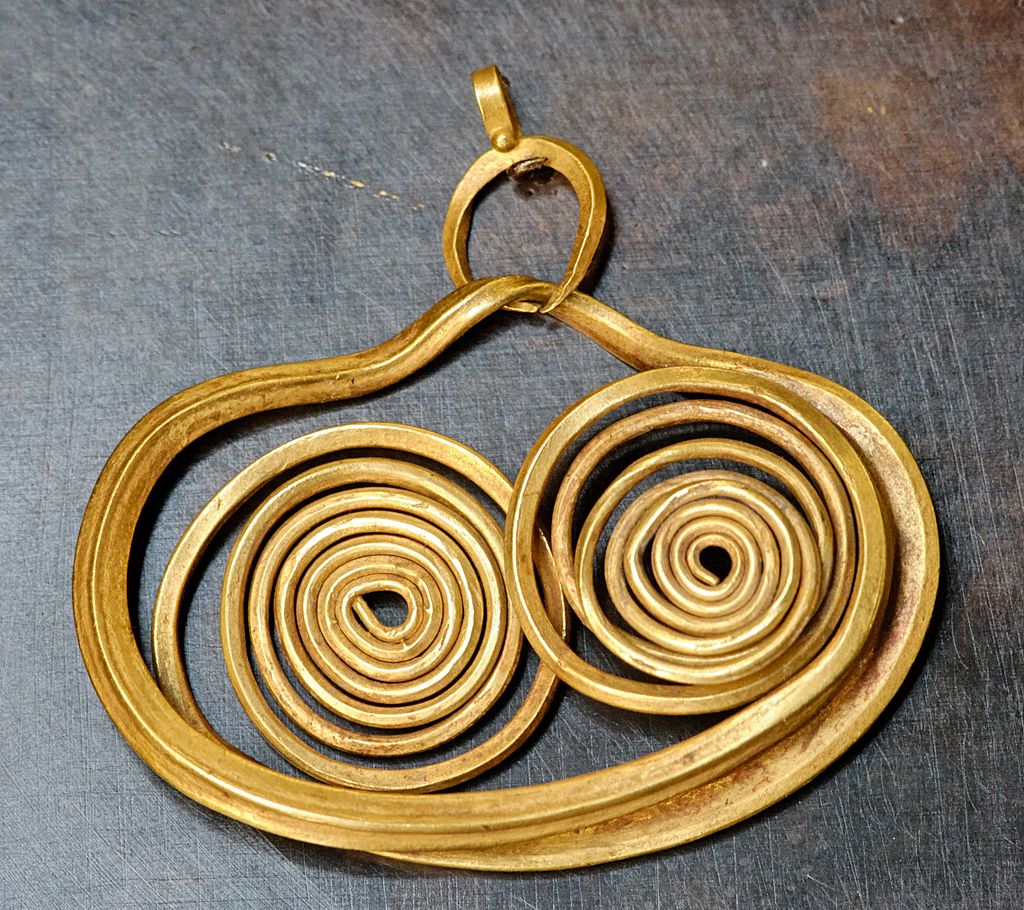
1024px-Earring_Mycenae_Louvre_Bj135

But now having been freed from sin and enslaved to God, you derive your benefit, resulting in sanctification, and the outcome, eternal life.

Romans 6:22


          The monastic reads these words and goes to the doorpost, awl in hand.

As we grow older, most of us can say through experience, “Everybody’s got to serve someone.”  Foreign as the idea may seem to us, In Israel, when a slave had finished his indentured service, he was given to decide to stay with his master.

“But if the slave plainly says, ‘I love my master, my wife and my children; I will not go out as a free man,’ . . . then his master shall bring him to God, then he shall bring him to the door or the doorpost. And his master shall pierce his ear with an awl; and he shall serve him permanently. (Exodus 21:5,6 – NASB)


         In that day and in that culture, it was considerably more honorable to be a loved and respected slave, cared for and serving a respected master than to be shiftless, a beggar, serving no one and producing nothing.

When the monastic soul learns that slavery to God is an option, it does not turn away. For us, our service to God is to be shackled to righteousness, peace, and joy in the Holy Spirit, and to the fruitfulness of which the Lord spoke most often. As Lord and Master, our God commands us to bear the fruits of faith and hope and love, and it is a glory to us so to do.  We serve as dead to other masters and alive to God to do His unblemished will in the power of His Spirit, as all good slaves serve faithfully the one to whom they belong and under whose authority they make things happen.

We have presented our souls to be given irrevocably to the indenture of the Christ of God, to live under the authority of the Spirit of life in Him, enjoying the liberty of the best of all freedoms, to be free from sin and enslaved to righteousness.   Marketplace Monastics live out their lives forever yielded to the purity and simplicity of devotion to Christ. (2 Corinthians 11:3)

Mycenaeum earring

Marie Lan Nguyen, by permission

Share this:

  • Share on X (Opens in new window) X
  • Share on Facebook (Opens in new window) Facebook
  • Email a link to a friend (Opens in new window) Email
  • Share on Pinterest (Opens in new window) Pinterest
Like Loading...

Recreation – Part Two

Posted by Cor Unum Abbey on September 1, 2015
Posted in: Uncategorized. Tagged: devotional life, free time, monasticism, Recreation. Leave a comment

1280px-Nursing_home

No wonder monastics founded monasteries! However sharp the pang might be upon entering and hearing the door closed and bolted behind you, it would be a vapor compared with the attempt to live monastically in the marketplace.   It is superhuman, the effort involved in trying to pigeon-hole minutes and culling hours each day, herding and coralling them away from simple pleasures, so greatly coveted, that yield no benefit and bear no fruit.

The measure of our Recreation would be a simple thing if we could but measure honestly. There’s the rub. We say we watch too much television or shop more than we should, but how much is too much? Did we watch ten minutes more than we had planned, or three hours more? Did we spent five dollars frivolously, or fifty? Or five hundred? In traditional monasteries, these things were never an issue: no television and no trips to the mall. No money. No possessions.

For us as for them, we want to be here in Cor Unum, but there is another life at hand, full of delights. Professional nuns will tell you that the bolting of the door does not at all lock out distractions and diversions of mind and heart, but there are two handrails that do help the postulants and novices over the bridge:

  • there is a divine work to be done, and
  • there is a sparsity of time allotted to anything else.

We revolt at the idea of workaday devotion, but Jesus frequently referred to the task at hand. Laborers in the field, the Father’s business, the husbandman, the vinedresser, the faithful and unfaithful servants. Is it all just “Get the job done!” After the large carpet in the main hall, the windows upstairs and down, and the tapestries and the draperies, you can go to the ball.

No! We are at the palace and the musicians are tuning up.   Working, resting, alone and in company, we are with the Lord, and He wants it no other way. Our goal in this monastery is the abiding life of Christ, not a spiritual to-do list.

Yet we must trust that there is a work to be done. In His nature, as He inscribes it in us, there is purpose. How does our Recreation fit in? We may have met one or two who are all spiritual work and no play in this kingdom, and the witness of their lives does not necessarily ring true.  Still, our leisure must not keep us from the eternal importance of the finished work of Christ, accomplished in us and through us, over time and with effort.

We begin from the perspective that our lives are not our own, but the One to Whom we belong has given us many good things to enjoy. What can compare with reading a book, something funny or poignant or revelatory, and suddenly discovering that the Lord is reading along, sharing our delight when we laugh at Mrs. Pringle of Fairacre, lamenting that the new young Doctor doesn’t believe she is following her diet, just because she gained a few pounds.

And when Fanny Dashwood talks her husband down from every possible financial assistance to his widowed stepmother and stepsisters, from the gift of a small stipend and a home which he could afford to give, to the occasional behest of a few pounds on special occasions, to Fanny’s penultimate remedy of looking in on them from time to time, and all this while the opening credits to roll, we cringe and shake our heads in derision, and we aren’t alone.

That is part of the secret.  We are not alone, not in work or at play, not when we read or rest or rake the yard.  If we could master this one thing, that what we do, we do with the Lord, and for His pleasure’s sake, we would enjoy the best Recreation to be had. We would know Him as seldom He is known, for all art and music, all laughter and every appreciation of beauty and good fun, come from Him.  When we rejoice in pleasures, our enjoyment is His gift to us.  If we can enjoy a thing with Him, delighting in His creation and creativity, even through the brush or the pen of another, we know Him better than we did before.  If we think there are no boundaries, no limits as long as we are having a good time or relaxing, we don’t know Him as we should, and we will never enjoy the most exquisite pleasures of His company.   Our Recreation in and with the Lord is lived out rather the way that your grandparents lived in retirement, never separated long if they could help it, doing what had to be done, working and praying, in the house, in the garden, in the community, taking little honeymoon moments for themselves every day, on the porch, over coffee, watching Jeopardy, and then padding off to bed, together.

Once again we say here in Cor Unum, these things are personal. We are the Abbesses of our own monasteries. They, monks and nuns enclosed, have prescribed hours for everything, and they like it like that. We have days and years stretching before us, hundreds of thousands of minutes to reclaim, some for work, some in devotion, some in Recreation … all for the Lord.

John 6:20 … The work of God is this, to believe on the One Whom He has sent.

Thomas Bjorkan,

by permission, Wikipedia

Share this:

  • Share on X (Opens in new window) X
  • Share on Facebook (Opens in new window) Facebook
  • Email a link to a friend (Opens in new window) Email
  • Share on Pinterest (Opens in new window) Pinterest
Like Loading...

Recreation and “Dust Under the Rug” – Part One

Posted by Cor Unum Abbey on July 23, 2015
Posted in: Uncategorized. Tagged: deeper devotional life, devotional life, monastic recreation, Recreation, redeeming the time, wasted time. Leave a comment

800px-Monet_Umbrella

Strange as it may seem, it is the hour of Recreation that becomes vital to the success of our Divine Office.

How we spend those hours that we allow of leisure, companionship, and simple pleasures will speak volumes of our monastic lives, and those minutes, flowing into days and years, can make or break us here in Cor Unum Abbey.

If it were as easily done as said, we would mention that the very best Recreation is the one that gives back in some way, and the worst is the time that is quickly gone and without any return, time that cannot be retrieved that has given nothing and taken much. For us, time spent in leisurely pursuits and in socializing is precious; we don’t want to waste a drop.

My father-in-law used to harp, or so I thought, on the evils of a wasted day. “You’ll never get that day back,” he would say, “always work hard, don’t slack, and never take a day off.” Really! That was his favorite hobby horse. It wasn’t difficult to see from whence came my husband’s superior work ethic!

“But vacations and leisure time are days well-spent, too,” I would argue, and now I wish I hadn’t. It wasn’t that what I said wasn’t true, but I realize today that I never really and fully acknowledged the wisdom of his words, the import of what he was trying to say. “Work while you’re at work! Don’t start making excuses to goof off when you have a job to do. Don’t jump at every chance to stay away.” There is room for that philosophy in the Abbey.

How I would love to have back just one half, just one quarter, of the time I’ve frittered away in my life! How I wish I could tell him, “I do understand what you were saying, and now I’m trying to live it out.”

We do have and always will have time for fellowship and time to recuperate from work and stress. For some of us – for most of us, at least on occasion – the problem is more often a need to recuperate from our lethargies.

Monastic “Recreation” is very much a renewing of our peace and joy, an opportunity to remember how much more important we are to the Lord than our busy-ness. However, when in monastic life our work becomes a devotion of prayer and praise, we know we are involved in something critically valuable. It needn’t be cluttered, but it may become intensely time-consuming and non-negotiable.

This part of our Divine Office is very, very personal and will require utmost honesty of heart.   This alone makes it worthwhile to us. One of us might watch a particular television show one evening and come away revived in the Lord. Another might read a few chapters of a favorite book to the same end. Still another might cancel their satellite service and never look back.

Here is a great place for a perennial reminder … we ourselves are the Abbesses of our cloistered lives. Only by the guidance of the Holy Spirit can we know how much is too much in what we allow; only in the Lord will we have the grace to see some things, like recreational shopping and too many club meetings, put aside, and forever. Our choices are personal, and the Lord, the Holy Spirit, will ever show us when and where we have robbed the altar of our own devotion. That is where we make changes as we go along.

We ought also to be keenly aware that it is easier to head a corporation, work in a hospital, or run a bakery than to be given to prayer and intercession, stillness and worship. Were that not so, there would be more nuns than nurses! If you have traded your career to start heading in a decidedly devoted direction, you already know how true that is. Nevertheless, almost all of us will need to have dinner out occasionally and keep up with a few friends, perhaps even a few television shows, a little gardening, a gym membership. You will know, if yours is a truly monastic heart, when Recreation has become Dissipation. A warning: as you go along, more and more of what was once innocent diversion will probably begin to seem extraneous and haphazard, wasteful. As you go along, deal with those things in perfect candor with the Lord. By the time you need to cut back, you’ll be ready, and you will know. Deep down, your favorite reality show won’t matter that much anymore. Truly, we live inside a reality that touches upon every kind of drama known to man.

A little more on this subject of Recreation next time, and we’ll take a look into a cloistered Recreational hour. Meanwhile, I leave you with this encouragement: as we do begin to set aside the things that have been taking so much and giving so little into our lives, delights and pleasures of peaceableness will take their place. Of those things to which my father-in-law referred, habits and slipshod ways that make the value of a day or an hour something lost and never to be found, we confess that we’ve all entertained them. In Christ we will redeem the time, here in this lovely monastery of the heart.

Le Promenade

by Claude Monet, public domain, 1875

Share this:

  • Share on X (Opens in new window) X
  • Share on Facebook (Opens in new window) Facebook
  • Email a link to a friend (Opens in new window) Email
  • Share on Pinterest (Opens in new window) Pinterest
Like Loading...

Monastic Rule

Posted by Cor Unum Abbey on April 18, 2015
Posted in: Uncategorized. Tagged: devotional life, Monastic Rule, Rule of St. Benedict. Leave a comment

800px-Code_of_Conduct_(United_States_Military)-1

Rules! Rules! Rules!

How we hate them!

But then, don’t we love them when our children obey them, when other motorists are careful of the rules of the road, and when our neighbors respect the laws governing tidy yards and quiet evenings.

It has been years for most of us since we have been grown-up, out of college, out on our own, masters of our own lives, subject but to death and taxes, as we like to say, however erroneously. Can we even begin to imagine how profoundly our own rules of conduct can or do change our lives? Not just those regulations that keep us out of jail and relatively free from public censure, but those rules that make all the difference in an ordinary life. It is our personal rule, not our talents and abilities, and not our defects and deficiencies, that set us apart, in truth.

It always interests me to consider that we all – that I – have rules that we keep, that we never credit as such, and some of them are particularly binding.

I have known what it is to have rules like these working powerfully in my day-to-day life:

No less than four hours of television, daily.

Never more than five minutes of prayer, at most, apart from grave emergencies.

Always stay up as late as can be got away with.

Read voraciously; if at all possible, put aside beneficial habits and many responsibilities in order to finish a good book.

Drink at least two large cups of coffee, daily. Drink no more than one glass of water.

Always have an opinion.

Give very few concessions to the weak.

Always interrupt when not given opportunity to speak.

Hope for a return of everything given.

Work rapidly, and when working, despise interruptions.

As I said, I know what it is to lead a regulated life, which is not to say well-regulated, but I was terrifically good at keeping those and other not so beneficial rules of conduct. I am learning how surpassingly delightful it is to have a new set of personal ordinances. Some are in place, some are sketchy but present, and all are very gladsome:

No media in the morning until after my devotional hour

No eating between meals.

Consecrate a substantial time in prayer every day, at least twice each day.

Never give way to bitterness or hopelessness in any manner.

No gossip, no excuses.

Take an extra devotional time before bed every night for 20-60 minutes.

Pray at least three minutes each day for each child (and for my husband when he was alive.)

At least twenty minutes daily in adoration and stillness before the Lord.

Find ways to fast in some manner, perpetually.

Limit television – no more than one, or for a special event, two hours daily.

Have lunch or coffee with someone besides my best friends, regularly.

Begin every devotional time with worship and/or thanksgiving.

Fast all desserts that aren’t part of a social event – no at-home sweets.

Arrange to get plenty of sleep.

Honor others at all times, in all circumstances.

I fear to publish this list, for those who know me best will be able to pinpoint the areas where I fall short, but several of those “rules” have become habits, and the best of them have become delightful to me. To be sure, just as it is the crowning glory of the Postulant’s life when she takes the full habit and white veil of the Novice, it is glorious to know that some of those habits clothe me now, but that list has been ten years in the making.

Many convents and monasteries operate under the “Rule of St. Benedict.” It is a charming read, antiquated but often practical.  For those who would seek God in community, it is a monastic factotum that has stood the test of time. St. Francis had a Rule, and so did St. Clare and so did George Washington (another terrific read, his Rules of Civility and Decent Behavior,) and so did John Wesley and so do the Marines, and the NFL, too.

May I encourage you to make a fresh set of rules for your life? Write down about ten of the regulations you keep “religiously” that don’t promote any benefit to you or anyone else. This list is important because we do have so many fixed obligations to statutes that are doing us nothing but harm, and it is good for us to see how well we’ve adhered to them! Then, make another list of those things you would most like to know, when life draws to a close, that you incorporated into your personal daily “Rule.” It is not at all necessary, and it has never been done, that any of us should be able to keep that Rule perfectly from square One, but once we know where we are going, it is certain that we can arrive there at length, even if we take any number of detours along the way. Here in Cor Unum Abbey, we avoid a great many false turns and dangerous excursions, but it is always one foot in front of the other.

Perhaps our primary rule ought to be, “Never give up!” Hosea says it best, verse 3 of chapter 6:

Let us know; let us press on to know the Lord;

His going out (forth) is sure as the dawn;

He will come to us as the showers,

as the spring rains that water the earth.” (ESV)

Code of Conduct, United States Military

Public Domain, Wikipedia

Share this:

  • Share on X (Opens in new window) X
  • Share on Facebook (Opens in new window) Facebook
  • Email a link to a friend (Opens in new window) Email
  • Share on Pinterest (Opens in new window) Pinterest
Like Loading...

Take Off Your Coat and Stay Awhile

Posted by Cor Unum Abbey on March 20, 2015
Posted in: Uncategorized. Leave a comment

Mary_of_Jesus_d'Oultremont

What must it be like, to remove the last vestiges of life in the world?

It cannot be just the shoes and stockings, the dress and petticoat. Imagine – you’ll not need a purse again, or the debit card inside. Ever.

There are the earrings Grandmother gave you for Christmas the year you turned sixteen; you can send them to your cousin. She always liked them.

Nail polish! No more, and never again. Make-up? You gave it to your niece to use when she plays “dress up.”

Everywhere you look, everything that moves is a sea of black or brown, and in the case of the Poor Claires, it might be a sea of shadows, for they patch their habits with whatever dark scraps come their way. Even Abbey cats seem often to come in black and white! Nevertheless, within weeks the new arrival starts to realize how poorly the habit hides individuality. Sister Elizabeth’s sense of humor cannot be masked; Sister Lucia’s tender heart is more evident than were her tattoos when she entered.

More than “you are what you eat,” women become what they wear. If clothes make the man, they define the woman. In Cor Unum, we no longer wear what we think we are. We clothe ourselves instead in what we hope to become. Ours is not a wimple and veil, but we are putting on habits of joy and faith in God.

Here in the monastery of the heart, we clothe ourselves in the righteousness of our Lord Jesus Christ, and heaven calls us BEAUTIFUL!

Mary of Jesus, founder of the Society of Mary Reparatrix, N.N.

in the public domain in the United States and European Union,

artist dead more than 70 years

Share this:

  • Share on X (Opens in new window) X
  • Share on Facebook (Opens in new window) Facebook
  • Email a link to a friend (Opens in new window) Email
  • Share on Pinterest (Opens in new window) Pinterest
Like Loading...

The Bells

Posted by Cor Unum Abbey on March 16, 2015
Posted in: Uncategorized. 2 Comments

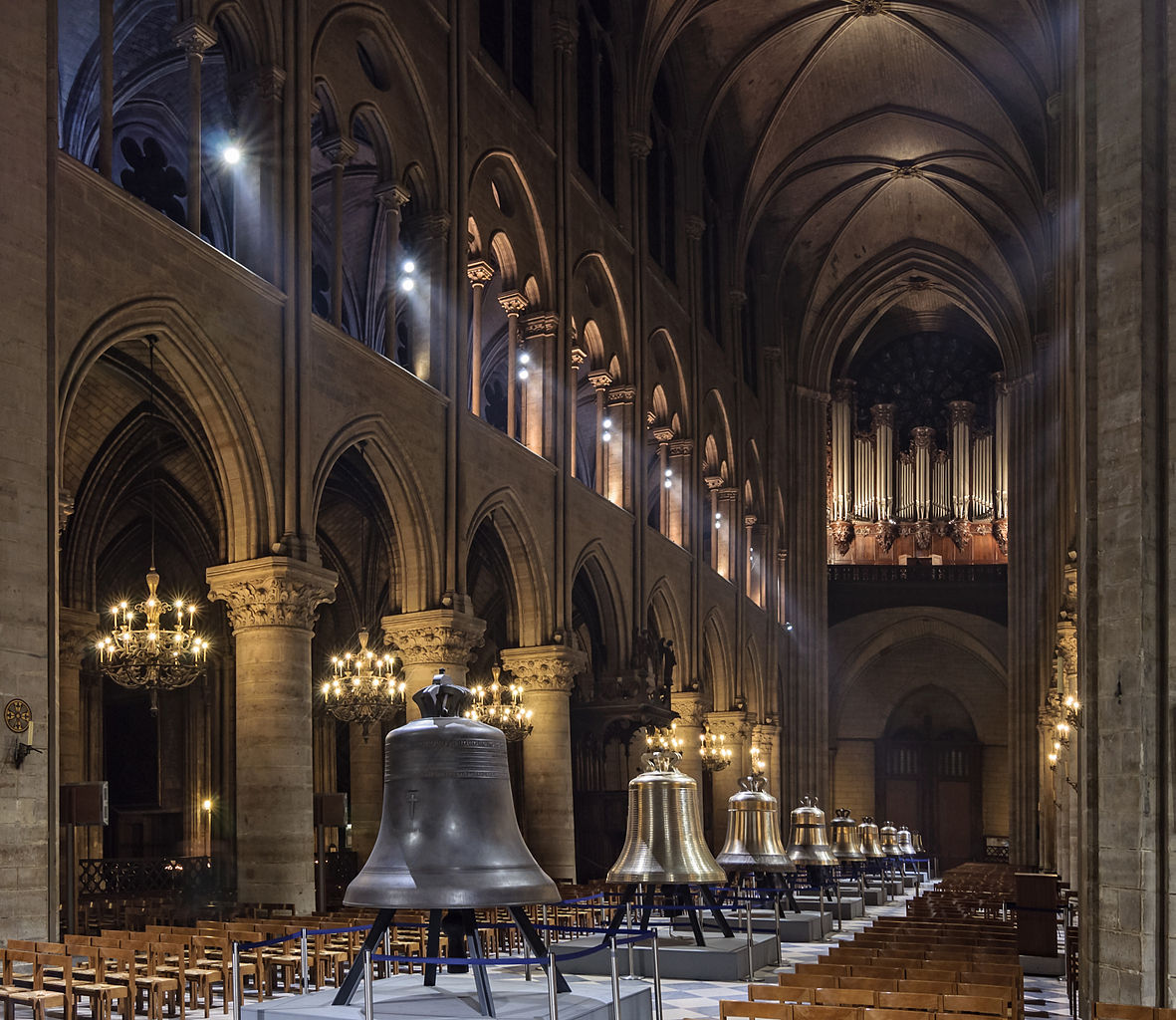
1181px-Cathedrale_Notre-Dame_de_Paris_nef_nouvelles_cloches

Those dear, innocent bells! Little do they know that for as many as they welcome into monastic life, there are dozens more who want no part of it, because of them.

For each man or woman on earth who lives according to a rule or schedule of devotion, there are dozens, hundreds, perhaps hundreds of thousands who boldly say, “I could not and would not live under the regimen of bells, a devotional schedule, punching in to spend time with God.” Even among those who do love the Lord Jesus Christ, the idea of developing such a well-ordered life with Him does not always appeal. “Surely,” they say, “He is not glorified by that kind of forced worship.”

The monastic says, “He wasn’t glorified by all the time I could have spent with Him and didn’t, either.”

For most monastics, the bells become the sweet sound of the rhythm of the life they have chosen, a call to worship, to prayer, to four, perhaps five, or even seven daily trysts with the Lord they love. Nevertheless, one of the most difficult early adjustments is that of stopping in the middle of a project, closing up shop just when you’re making progress, donning the mantle reserved for Chapel attendance, and filing silently into one’s place for as much as an hour (and sometimes more!) of Gregorian chant.

But …

… that’s why they entered.

One young postulant, about to enter her Novitiate year, said that she found herself standing on a street corner one day, with all the pulse and energy of a big city around her, the life she had formerly enjoyed, but asking herself, “Is this all there is for me?” She had a big job in a big city, but she also had a big love for God, and her busy life was not nurturing that love at all.

Did she have to enter a cloister in order to fulfill the desires of her heart toward the Lord? We are the ones who will be able to answer that question.

Even when we are successful in setting daily parameters for ourselves, when we can identify the built-in reminders that keep us within them, and even if we have bells that sound to keep us faithful in our marketplace vocations, we will never have quite what is to be had in cloister. It won’t take long for us see how many and how distracting are the phone calls, many of them unsolicited, the interruptions that come with the people we care about, the disturbances that creep in with every little diversion in our lives. A book we are reading will have us thinking about the plot for days; the music we listen to reverberates in our ears long after we heard it, perhaps standing in line at the grocery store; conversations we have with friends leave us contemplative, and not toward the Lord in every case. When such things are reduced by 75 or 100%, it makes a noticeable difference. When the things that enter our minds and our senses are always toward God, it makes a difference.

That is why they entered, our cloistered counterparts.

The bells and gongs and clappers call them to the hours of each day most precious to them, even if their natural inclinations say, like ours, “Just a minute! Let me finish what I’m doing, and then I’ll come.” When twenty or thirty other women are waiting for you, looking at your empty place in Choir, when they won’t be fully at ease until you are there with them, you learn quickly to attend to the bells that call you.

It’s rather like the young mother with a fussy child, trying to get him quieted for sleep in the afternoon. She leaves him, perhaps still sobbing that he has to close his eyes for an hour or so, and she says on her way out the door, “I wish someone would make me take an hour’s rest every day!” Monastics have taken that wishing into their own hands, and together they take time out of every day to bring themselves before God in worship and intercession.

Together they worship and pray. If ever there was an evidence of strength in numbers, it is to be found in cloister. We will take a look at that brand of unity one day soon.

Meanwhile, I hope you’re enjoying your extra five or ten minutes with the Lord, fitted somewhere into your day as a reminder that He is near and that you are glad. Have you felt yet that it is a waste of time, too interruptive to your day, not worth the effort? If you haven’t, you probably will, but your own choice will sanctify those minutes. I keep a few bells at hand in my house, and often will I ring them as I begin my Psalms Office or Matins in the morning … I love how they say, “These minutes are now the Lord’s own,” and somehow my heart answers them, “You speak truly, dear little friends.”

The new bells of Notre Dame Cathedral.
Mirabelle, Wikipedia, by permission

Share this:

  • Share on X (Opens in new window) X
  • Share on Facebook (Opens in new window) Facebook
  • Email a link to a friend (Opens in new window) Email
  • Share on Pinterest (Opens in new window) Pinterest
Like Loading...

Posts navigation

← Older Entries
Newer Entries →
  • Follow Marketplace Monastics on WordPress.com
  • Praying Through the Psalms

    Praying for those too weak or wounded to lift up their heads.April 8, 2019
    We have entered a season of caring deeply, on purpose, for those we know and love, those fainting along the way.
  • Recent Posts

    • Camping Out at the Throne of Grace
    • Breakthrough
    • But, How?
    • At War With Amalek!
    • Man Tears, Day Nine
  • Recent Comments

    Cor Unum Abbey's avatarCor Unum Abbey on December 12 – Warrior…
    hillcoop's avatarhillcoop on December 12 – Warrior…
    Cor Unum Abbey's avatarCor Unum Abbey on December 5 – “Savi…
    Wendell A. Brown's avatarWendell A. Brown on The Mystery Weapon
    Cor Unum Abbey's avatarCor Unum Abbey on Ornamental Advent
  • Archives

    • August 2024
    • January 2021
    • July 2020
    • June 2020
    • May 2020
    • April 2020
    • March 2020
    • February 2020
    • January 2020
    • December 2019
    • November 2019
    • October 2019
    • September 2019
    • August 2019
    • July 2019
    • June 2019
    • May 2019
    • April 2019
    • March 2019
    • December 2018
    • February 2018
    • January 2018
    • December 2017
    • November 2017
    • October 2017
    • February 2017
    • January 2017
    • December 2016
    • November 2016
    • February 2016
    • January 2016
    • December 2015
    • November 2015
    • October 2015
    • September 2015
    • July 2015
    • April 2015
    • March 2015
    • February 2015
    • January 2015
    • December 2014
    • November 2014
  • Categories

    • 40 days of Prayer
    • Advent 2016
    • Advent 2017
    • Bearing Burdens
    • Christmas 2017
    • devotional life
    • FEAR
    • Lent, 2018
    • Lenten Fast, 2018
    • Lenten Fast, 2019
    • monasteries
    • monasticism
    • personal devotion
    • Prayer for families
    • Prayer for the Nation
    • Prayer from January 20 to Lent
    • Praying Through the Psalms
    • Psalm 27
    • spiritual warfare
    • Spiritual Warfare 101
    • the image of Christ
    • The Wise and Foolish Virgins
    • Uncategorized
  • Meta

    • Create account
    • Log in
    • Entries feed
    • Comments feed
    • WordPress.com
Create a free website or blog at WordPress.com.
Marketplace Monastics
Create a free website or blog at WordPress.com.
Privacy & Cookies: This site uses cookies. By continuing to use this website, you agree to their use.
To find out more, including how to control cookies, see here: Cookie Policy
  • Subscribe Subscribed
    • Marketplace Monastics
    • Join 31 other subscribers
    • Already have a WordPress.com account? Log in now.
    • Marketplace Monastics
    • Subscribe Subscribed
    • Sign up
    • Log in
    • Report this content
    • View site in Reader
    • Manage subscriptions
    • Collapse this bar
 

Loading Comments...
 

    %d