
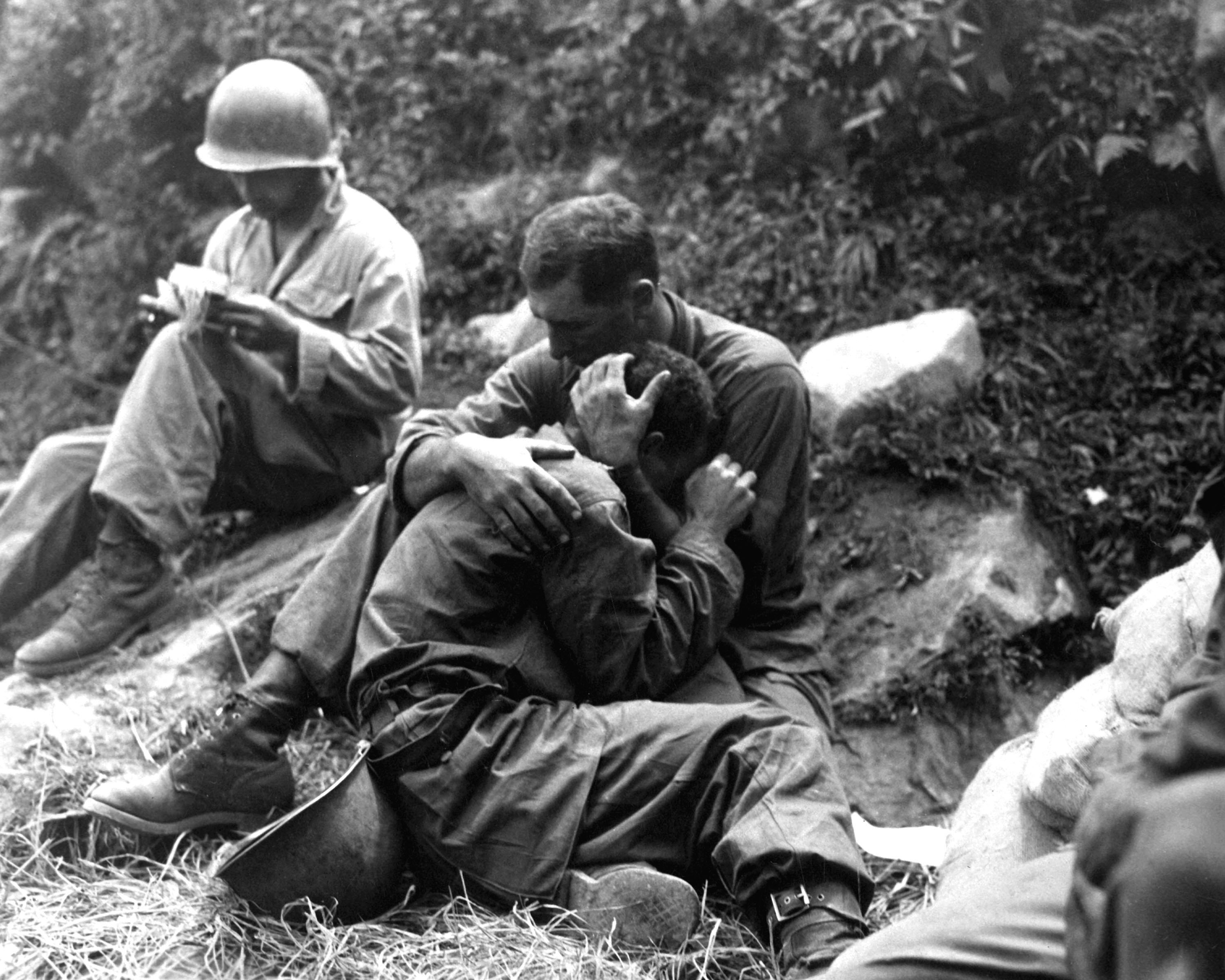
A grief stricken American infantryman whose buddy has been killed in action is comforted by another soldier. In the background a corpsman methodically fills out casualty tags, Haktong-ni area, Korea. August 28, 1950. Sfc. Al Chang. PD-USGov-Military-Army, on Wikipedia
One of the older men, Omar Reygadas, was also one of the first to come to terms with his destiny and the pain in his heart. When Jesus wrote in the earth at the occasion of the Pharisees delivering up the woman caught in adultery, they began to walk away, from the oldest to the youngest. I’ve always wondered if, perhaps, what He wrote was the most difficult to bear for those with the most years of sinfulness in the ledgers of their souls. This older man, Omar Reygadas, on the second day under the earth, walked off alone – one of the most strictly observed rules for miners: no man goes anywhere alone. A man could slip into a chasm with no one to know where he was, or a rock could fall on him and render him unconscious, with no one to go for help.
Omar quietly slipped away. He couldn’t be in more danger than he was, and he needed time alone with his thoughts and with the Lord. He said later that he, unashamedly, began to weep and weep, to cry like a little boy, and you and I can picture man tears, which are stultifying when we see them. Men weeping like that make us want to hide our faces. After a little while, he wiped his tears and made a man-decision. He would go back to the others, and he would be as strengthening and helpful and encouraging to them as he could be, for as many days as they had left.
Call your 33 friends to mind, the 33 people whom you know are hidden or trapped in some darkness, if only a little darkness in one little corner of their lives. The young married woman who finds her new husband more disappointing than she had imagined, less able to meet all her needs, unconsciously moving her marriage closer and closer to divorce. The friend you’ve known for years who really cannot abide the neighbor’s children. The young man you’ve long feared who would end up in trouble, and who did. There is something to be said for the tears we shed for them. I will speak of that again, but with or without tears, can we begin to allow our compassion to go as deep as their darkness? We will have to exercise it, not just feel it. We will have to dig and keep digging, and our hearts will suffer the trowel of our prayers, if we are willing to care deeply.


 Marketplace Monastics